Mental Health Support Tools For Our Adult Learners
Accessible Anytime. Anonymous Sign Up. Always Growing.

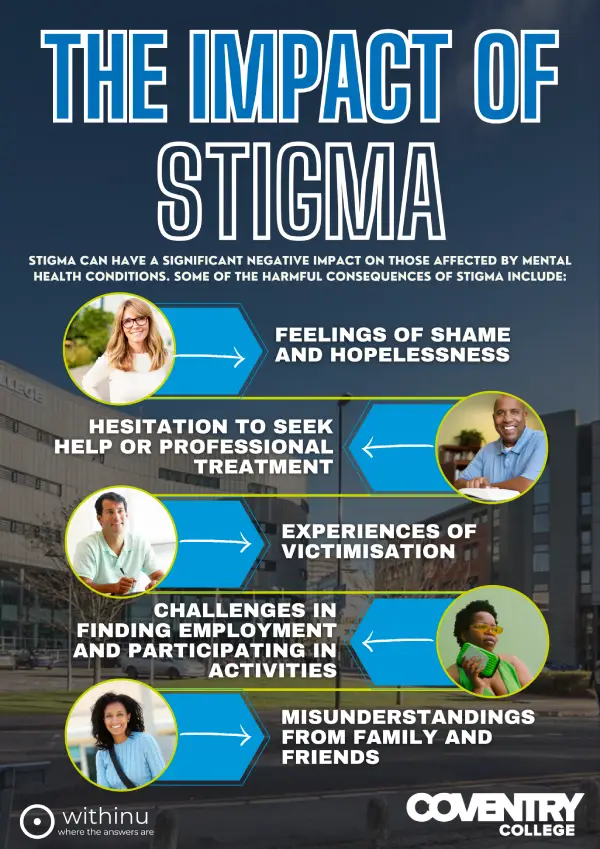
Stigma can have a significant negative impact on those affected by mental health conditions. There are two types of stigma to be aware of:
Social stigma refers to the unfavourable treatment and unfavourable attitudes that society and/or individuals may have towards those who are dealing with mental health conditions. One extreme example of a societal stigma is the false belief that “all people with mental health problems are violent and dangerous.” It’s imperative that we challenge any misconceptions and create a society that is more understanding and accepting of everyone.
Self-stigma is when people with mental health conditions internalise unfavourable ideas about their condition and take them as true. Self-stigma can cause people to delay or avoid seeking help because they are afraid of being rejected or made to look and feel bad. We need to encourage individuals who are struggling with mental health challenges to see their value and see that they too, deserve care and assistance and that we all have mental health, so they are not alone.
Some of the harmful consequences of stigma include:
1. Feelings of shame and hopelessness
2. Hesitation to seek help or professional treatment
3. Experiences of victimisation
4. Challenges in finding employment and participating in activities
5. Misunderstandings from family and friends